
When it comes to antiestrogens, the first mistake to avoid is assuming that they are all the same. In reality, the term encompasses different drugs, each with distinct mechanisms of action and very specific indications. Some block the estrogen receptor, others reduce estrogen production, and still others promote its breakdown.
There is also a second point that is often overlooked: estrogens are not hormones that should be “eliminated.” They are physiological molecules that play a useful role in many tissues and are important in both women and men. Anti-estrogen therapy makes sense only when there is a clear clinical goal, a well-defined context, and a favorable risk-benefit ratio.
That’s why the right question isn’t just “Which anti-estrogen should I use?”, but rather “Do I really need an anti-estrogen?”
What are antiestrogens, and why don’t they all belong to the same category?
In everyday language, the term “antiestrogens” is used very broadly. In medicine, however, the distinctions matter. The most well-known drugs fall into three main categories: SERMs, SERDs, and aromatase inhibitors.
SERMs selectively modulate the estrogen receptor. This means they can act as antagonists in one tissue and as partial agonists in another. Tamoxifen, raloxifene, and clomiphene belong to this class, but they do not have the same indications.
SERDs, such as fulvestrant and, more recently, elacestrant, do more than simply block the receptor. They destabilize it and reduce its availability, which is particularly effective in certain hormone-sensitive breast cancers.
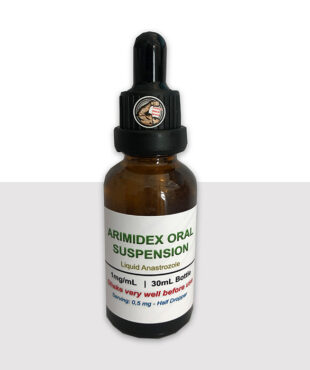
Aromatase inhibitors take a different approach: they do not act on the receptor, but rather reduce estrogen synthesis. Anastrozole, letrozole, and exemestane belong to this class. This is a crucial distinction, as it affects the drug’s efficacy profile, tolerability, and the type of patient for whom it is suitable.
















When antiestrogens are indicated for major clinical conditions
The area where antiestrogens play the most significant role is hormone receptor-positive breast cancer, that is, tumors that are sensitive to estrogen. Here, endocrine therapy is a standard part of treatment, both in the early stages and in advanced or metastatic disease. The choice depends on menopause status, risk of recurrence, prior treatments, and the tumor’s biological characteristics.
There is also a preventive use in women with an increased risk of breast cancer, as determined by clinical evaluation. In these cases, certain medications may reduce the likelihood of developing an estrogen-dependent tumor, but this is not an automatic choice. A very careful assessment of the expected benefits and potential adverse effects is required.
Another area is fertility. Clomiphene, a long-established SERM used to induce ovulation, has been known for decades. Today, in certain conditions—such as some forms of anovulation—the first-line treatment may differ and depend on the clinical context. This highlights an important point: “antiestrogen” does not mean “a drug useful for any hormonal problem.”
Finally, there are specific situations, such as postmenopausal osteoporosis treated with raloxifene, in which the benefit relates to bone health and a reduced risk of ER-positive breast cancer in selected patients. Outside of these contexts, caution should always be exercised when using the drug.
In practice, antiestrogens are primarily used in the following situations:
- HR+/ER+ breast cancer: This is the most important and best-defined indication in modern guidelines.
- Reduced risk of breast cancer: possible in women with a high-risk profile and a low risk of adverse events.
- Anovulatory infertility: selective use, particularly with clomiphene and in specific treatment protocols.
- Postmenopausal osteoporosis: raloxifene in selected cases, with different objectives than in oncology.
Practical differences between SERMs, SERDs, and aromatase inhibitors
Just looking at the drug’s name isn’t enough. What matters is the biological target. A SERM acts on the receptor, a SERD breaks it down, and an aromatase inhibitor reduces estrogen production. This leads to very concrete differences.
The physiological context also matters. In postmenopausal women, where most estrogen is derived from peripheral aromatization, aromatase inhibitors are often very effective. In premenopausal women, with active ovaries, the situation is different, and some medications do not work as well when used alone.
| Class | Examples | Main mechanism | Most frequent use | Key point |
|---|---|---|---|---|
| SERM | Tamoxifen, raloxifene, clomiphene | They modulate the estrogen receptor in a tissue-specific manner | Oncology, prevention, fertility, osteoporosis | They can have opposite effects depending on the tissue |
| SERD | Fulvestrant, elacestrant | Blockade and downregulation of the estrogen receptor | Advanced/metastatic breast cancer | A highly specialized role, particularly in modern oncology |
| Aromatase inhibitors | Anastrozole, letrozole, exemestane | Reduced estrogen synthesis | HR-positive breast cancer in postmenopausal women | They are not equivalent to SERMs and should not be viewed simply as “estrogen blockers” |
Choosing an antiestrogen: menopause, disease stage, and individual risk
One of the most important criteria is menopausal status. In premenopausal patients, tamoxifen remains a long-standing and still current standard of care. Aromatase inhibitors, on the other hand, are not appropriate as monotherapy if ovarian function is still active, because the body can compensate for the peripheral reduction in estrogen.
In postmenopausal patients, aromatase inhibitors are often preferred for the adjuvant treatment of HR+ breast cancer, or they are administered sequentially with tamoxifen. The choice is not set in stone: it may change if toxicity occurs, if the risk of bone-related complications is high, or if there are specific contraindications.
The stage of the disease is equally critical. In early-stage disease, the goal is to reduce the risk of recurrence after surgery and, when indicated, after chemotherapy or radiation therapy. In metastatic disease, the approach is broader and may include SERDs, combination therapies, and molecular assessments, such as testing for ER1 mutations.
The right medication almost always results from a combination of several factors:
- age and menopausal status
- early-stage or metastatic
- risk of thromboembolism
- bone health
- uterine or endometrial conditions
- treatments already received
- individual tolerance
- molecular profile of the tumor
Side effects and clinical precautions associated with antiestrogens
Discussing efficacy without addressing tolerability would paint an incomplete picture. Each class of drugs has its own characteristic risk profile. This does not mean that these drugs are “dangerous” in a general sense, but rather that they must be selected and monitored carefully.
Tamoxifen, for example, is known for its risk of thromboembolism and its effect on the endometrium. Aromatase inhibitors are more commonly associated with bone loss, joint pain, and increased skeletal vulnerability. SERMs can lead to gastrointestinal disturbances, fatigue, laboratory abnormalities, or issues related to the route of administration.
Then there is the issue of drug interactions, which remains very important. Some medications can interfere with the metabolism of tamoxifen; other treatments require caution due to concerns regarding liver function, bleeding, or metabolism. Pregnancy and breastfeeding also require careful evaluation.
Effective anti-estrogen therapy is not based solely on the initial prescription. It requires clinical monitoring, assessment of symptoms, appropriate testing, and the ability to adjust the treatment strategy over time.
The main points to note are as follows:
- SERM: risk of thromboembolism, hot flashes, possible effects on the uterus and endometrium; use with caution during pregnancy.
- Aromatase inhibitors: reduced bone density, joint pain, fractures, vaginal dryness, and possible changes in lipid profile.
- SERD: nausea, fatigue, liver abnormalities, gastrointestinal effects, practical challenges with intramuscular injections.
- Monitoring: bone densitometry when indicated; gynecological evaluation if abnormal bleeding occurs; monitoring for drug interactions and liver function.
Anti-estrogens and non-oncological use: where the confusion stems from
Outside of medical terminology, the term “antiestrogen” is often used as a shorthand. This is common in sports, fitness, and many online discussions. The problem is that this oversimplification lumps together different drugs, different goals, and very different risks.
An increase in estradiol, a suspicious symptom, or an out-of-range lab result does not automatically mean that an anti-estrogen is necessary. What matters is the full picture: actual symptoms, medical history, medications taken, gonadal function, fertility, and cardiovascular, bone, and liver health. Even in men, where this topic is often discussed very briefly, estrogens serve useful physiological functions.
More importantly, drugs in this category are not interchangeable. A SERM does not automatically replace an aromatase inhibitor, and a SERD is almost always used in a specialized oncology setting. Confusing these classes leads to practical errors and unsafe decisions.
A simple rule goes a long way: fewer generic labels, more clinical precision.
What to Consider Before Starting Anti-Estrogen Therapy
Before starting anti-estrogen therapy, the key question is not just about the medication, but about the goal. Is the goal to reduce the risk of recurrence? To induce ovulation? To treat metastatic disease? Or to prevent recurrence in cases of high risk? Different goals require different approaches.
It’s worth clarifying a few points with your doctor or specialist:
- Actual indication: What is the diagnosis or clinical reason for prescribing the medication?
- Which class is most suitable: a SERM, a SERD, or an aromatase inhibitor?
- Menopausal status: Does this variable influence the choice or render it inappropriate?
- Personal risk factors: Do you have a history of blood clots, osteoporosis, or uterine or liver problems?
- Monitoring: What tests are needed during treatment, and how often?
- Expected duration: Is it a matter of a few days, temporary cycles, or years of treatment?
When these answers are clear, the treatment plan becomes clear as well. And antiestrogens cease to be a confusing category, returning to what they truly are: very different pharmacological tools, to be used only when the clinical context warrants it.