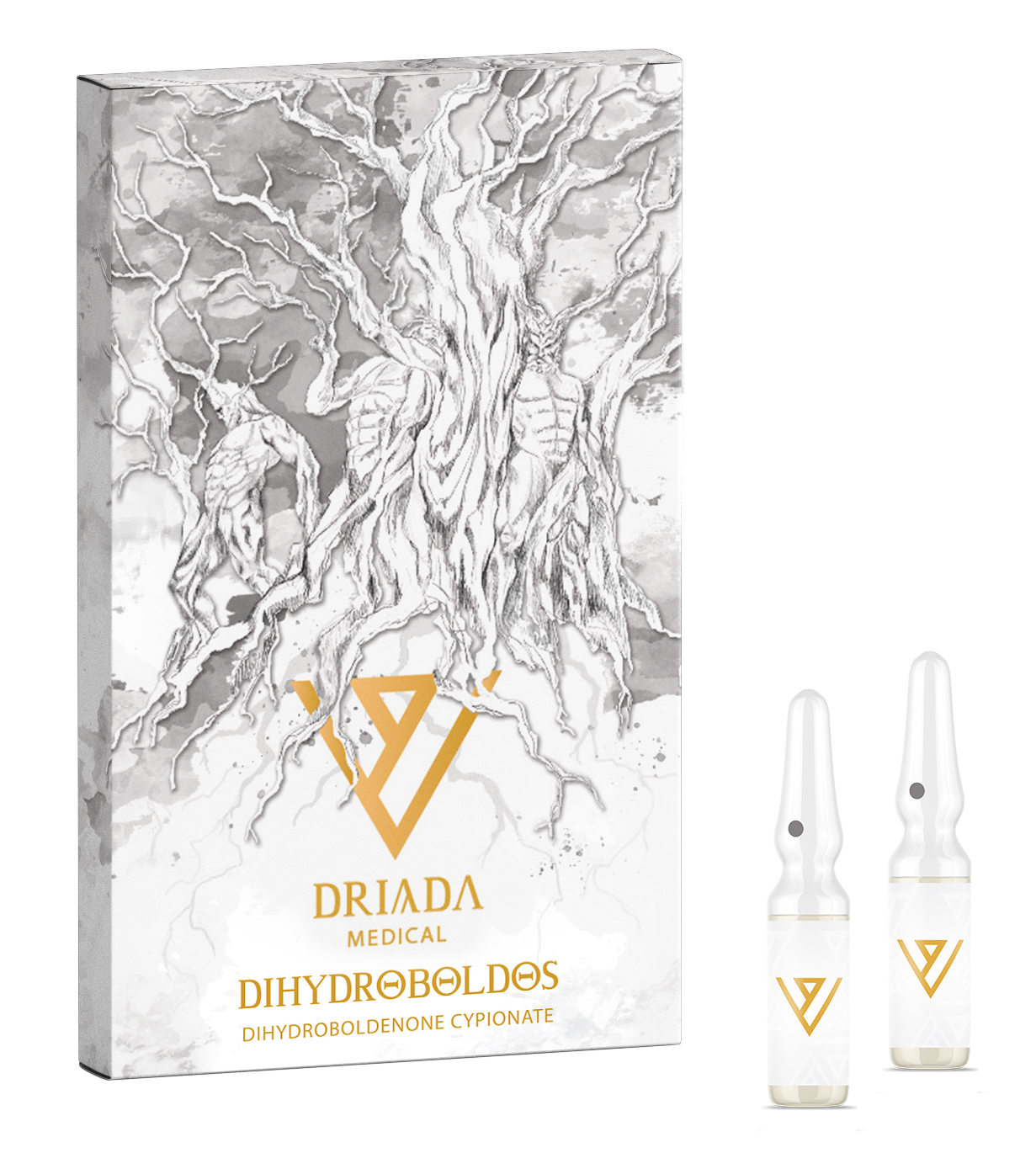
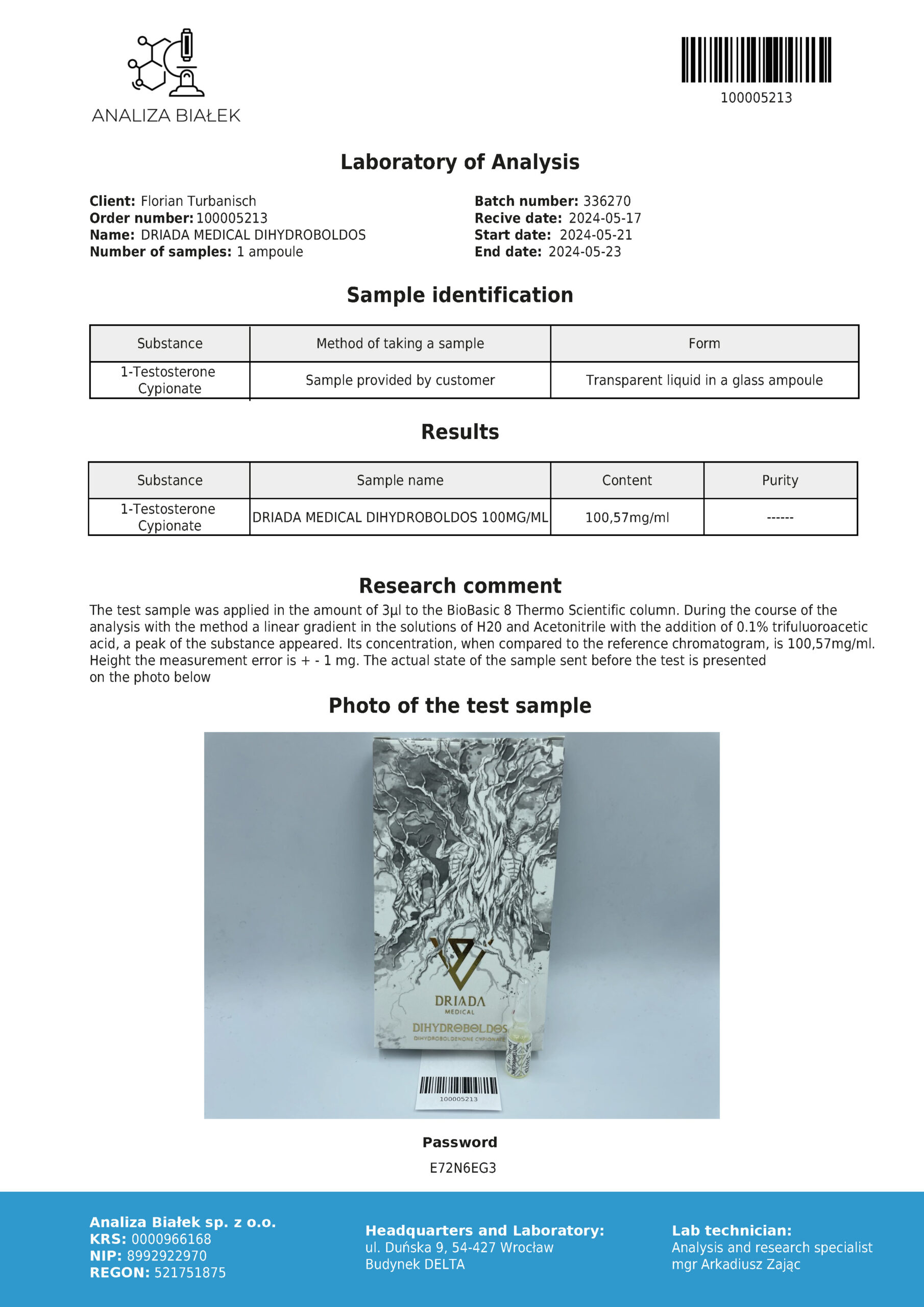
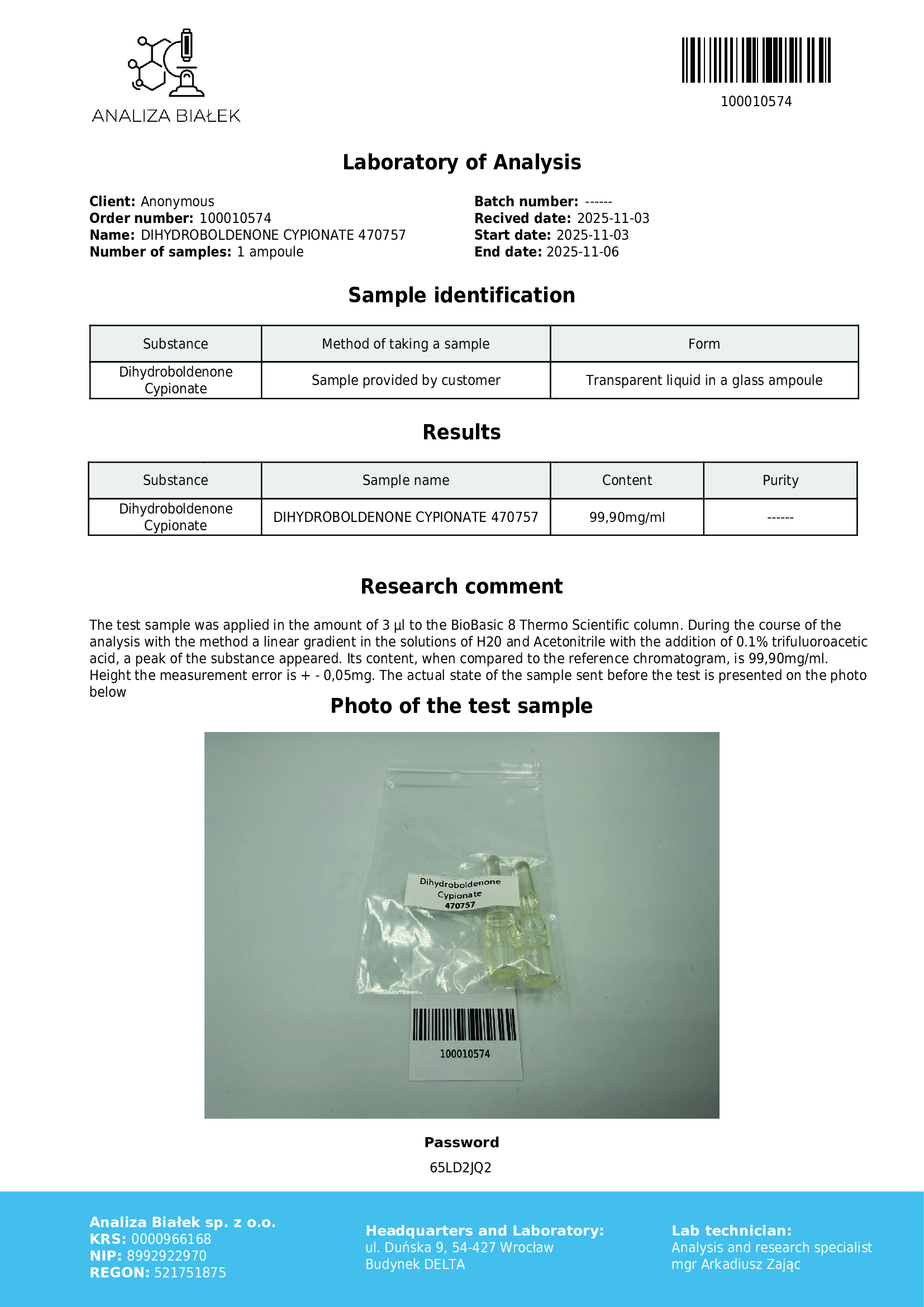
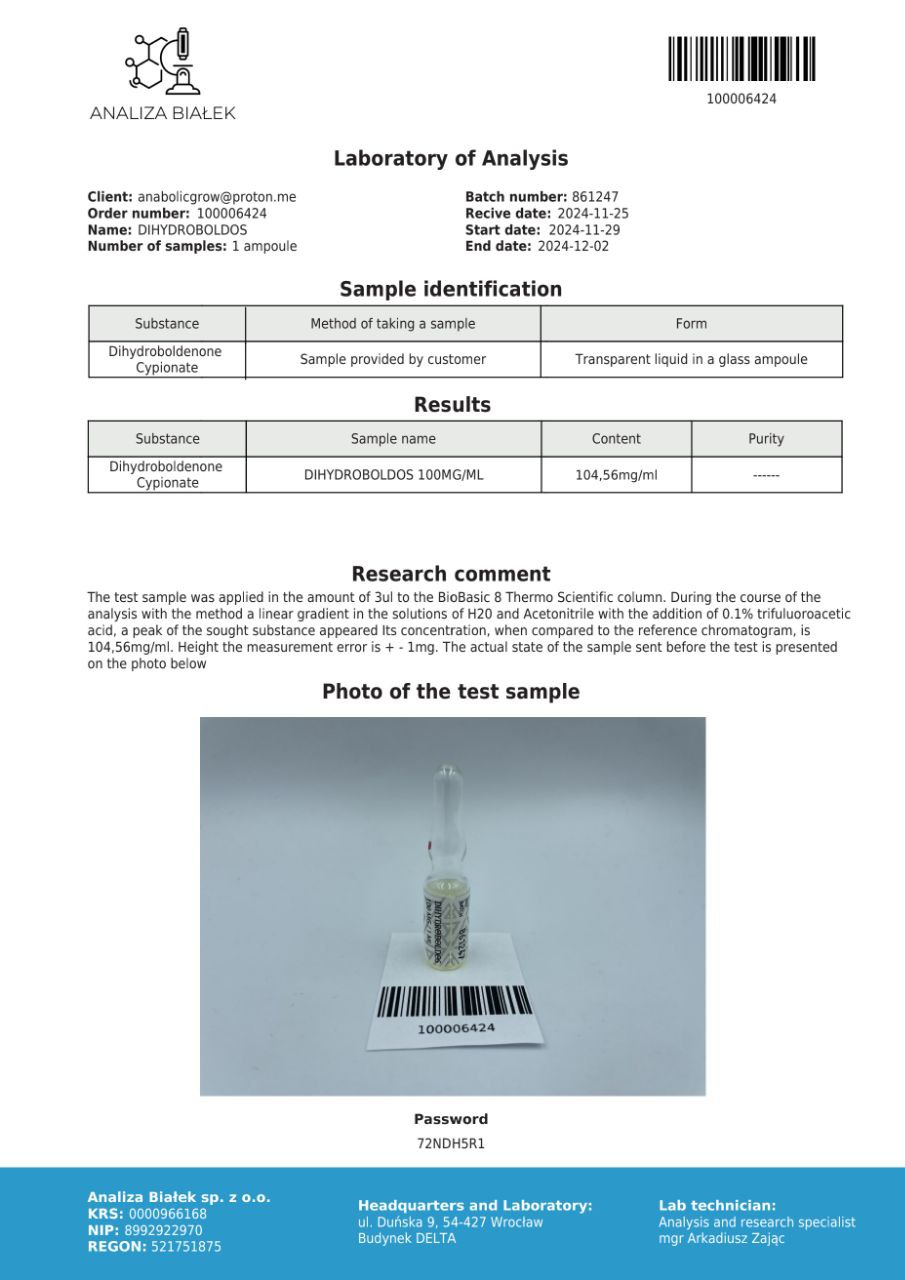
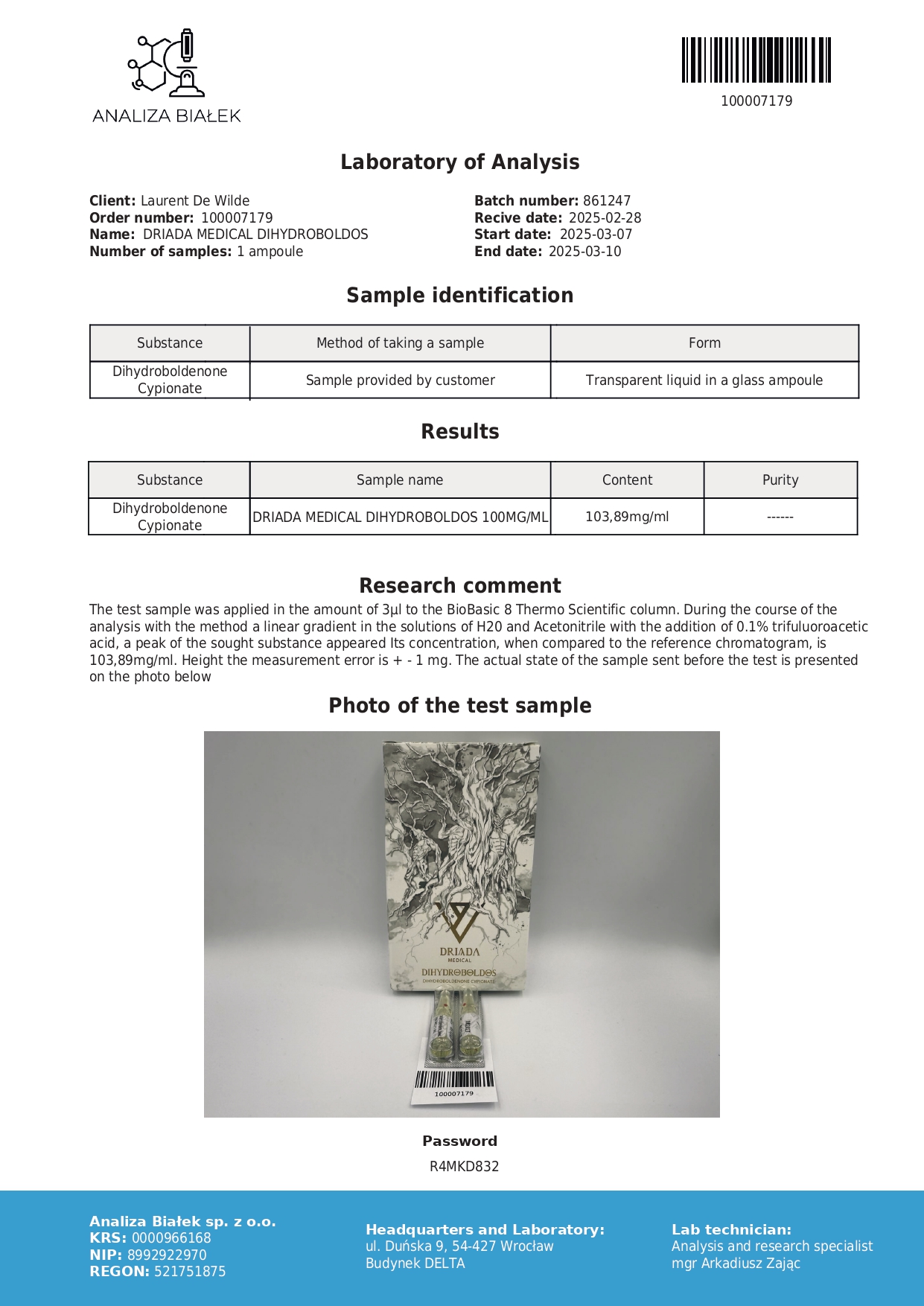
Dihydroboldos 100 mg/mL (Dihydroboldenone Cypionate)
Dihydroboldenone cypionate
Active ingredient: Dihydroboldenone cypionate
Category: Anabolic steroid derived from dihydrotestosterone (DHT)
Dosage form: Injectable preparation
Carrier oil: Mixture of MCT oil and grape seed oil
- Shipping (if the product is in stock): 3 business days for processing and 5 to 20 business days for shipping
- Processing and shipping costs: €27 throughout Italy
Description of Dihydroboldenone Cypionate (1-Testosterone)
Dihydroboldenone cypionate, also known as 1-Testosterone, is an anabolic steroid belonging to the family of dihydrotestosterone (DHT) derivatives. It is the 5-alpha-reduced form of boldenone (Equipoise) and is structurally very similar to methenolone (Primobolan).
The main structural difference lies in the absence of the 1-methyl group, which is present in Primobolan to improve its oral bioavailability.
Dihydroboldenone cypionate is considered one of the most potent non-estrogenic anabolics. Experimental studies indicate that its anabolic activity is approximately twice that of testosterone propionate, with a similar level of androgenicity. This gives it an estimated anabolic-to-androgenic ratio of about 2:1, making it one of the most potent natural compounds ever isolated.
In bodybuilding, dihydroboldenone cypionate is valued for its ability to promote solid, lean, high-quality muscle gains without significant water retention or estrogenic side effects.
Chemical Structure and Biological Characteristics
Dihydroboldenone cypionate is a direct derivative of DHT and has an additional double bond between carbons 1 and 2 (1-ene). This structural modification contributes to:
-
stabilize the 3-keto group
-
increase anabolic effectiveness
-
drastically reduce estrogen conversion
Because of these characteristics, the compound is classified as non-estrogenic. During use, gynecomastia, water retention, or estrogen-mediated fat accumulation are generally not observed.
Quality of Muscle Gain
The results achieved with dihydroboldenone cypionate consist primarily of lean, dense muscle mass, rather than bulky gains associated with subcutaneous fluid retention.
For this reason, it is often used in cutting cycles, when:
-
Muscle separation is a priority
-
Water retention should be minimal
-
The goal is not to gain weight quickly
Thanks to the significant increase in strength, it can still be used in controlled-mass cycles.
Impact on Cholesterol and the Cardiovascular System
Compared to testosterone and nandrolone, dihydroboldenone cypionate may have a more pronounced effect on the lipid profile, primarily due to its lack of aromatization.
However, its effect is generally less pronounced than that of many 17-alpha-alkylated steroids.
Like all AASs, it can:
-
lower HDL cholesterol
-
raise LDL cholesterol
-
affect blood pressure
-
promote left ventricular hypertrophy
Improper or prolonged use can therefore increase cardiovascular risk.
Tolerability and Specific Usage Considerations
Dihydroboldenone cypionate is known to be inherently irritating. Some reported effects include:
-
discomfort or pain at the injection site
-
reddening of the tissues
-
skin irritation in transdermal formulations
Some users also report a burning sensation when urinating, a rare side effect that is generally considered harmless.
Compared to boldenone, dihydroboldenone cypionate tends to have less of an effect on hematocrit, while offering greater strength gains; it is similar to Primobolan but significantly more potent.
Main effects
-
Increase in lean muscle mass with a possible reduction in body fat
-
Anabolic activity approximately 2× that of testosterone
-
Absence of gynecomastia and estrogenic effects
-
Lower androgenicity than testosterone
-
Significant increase in strength
-
No water retention
-
Suitable for controlled-mass and definition cycles
Possible side effects
-
Oily Skin and Acne
-
Irritation at the injection site
-
Increased body and facial hair growth
-
Hair loss in predisposed individuals
-
Possible virilizing effects in women (including clitoral enlargement)
-
Decrease in HDL and increase in LDL
-
Rarely, an increase in blood pressure
-
Possible mild liver toxicity
Pharmacological profile
-
Half-life: 6–8 days
-
Frequency of injections: every 5–7 days
Recommended dosages
Dihydroboldenone cypionate has never been approved for human use; therefore, there are no official guidelines.
In non-therapeutic uses, the following are commonly reported:
-
Injectable form (cipionate): 100–400 mg per week
-
Cycle duration: 6–12 weeks
Pharmaceutical form
Oily solution for injection, for intramuscular administration.
Contraindications
-
Pregnancy
-
Known or suspected tumors of the prostate or breast
-
Breastfeeding
-
Hypersensitivity to the active substance or to any of the excipients
-
Hypercalcemia
Storage
-
Keep out of reach of children
-
Store in a cool, dry place.
-
Protect from direct sunlight
-
Store at room temperature
-
Do not use after the expiration date
Related products
-
Andriolos 250 mg/ml (Testosterone Undecanoate) 10 ml vial
The original price was: $35.33 €The current price is: €33. -
Trenacetos 100 mg/ml (Trenbolone Acetate)
The original price was: €55.52 €The current price is: €52. -
Anadrolus 50 mg – Oxymetholone – Anadrol
The original price was: $39.35 €The current price is: 35 €. -
Propios 100 mg/ml (Testosterone Propionate) 10 ml vial
The original price was: $34.31 €The current price is: €31. -
Arimidyn 0.5 mg – Anastrozole – Arimidex
The original price was: €29.26 €The current price is: 26 €.