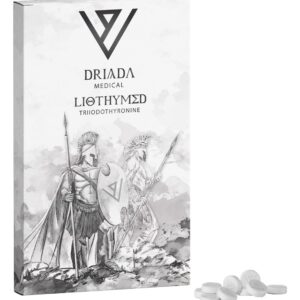

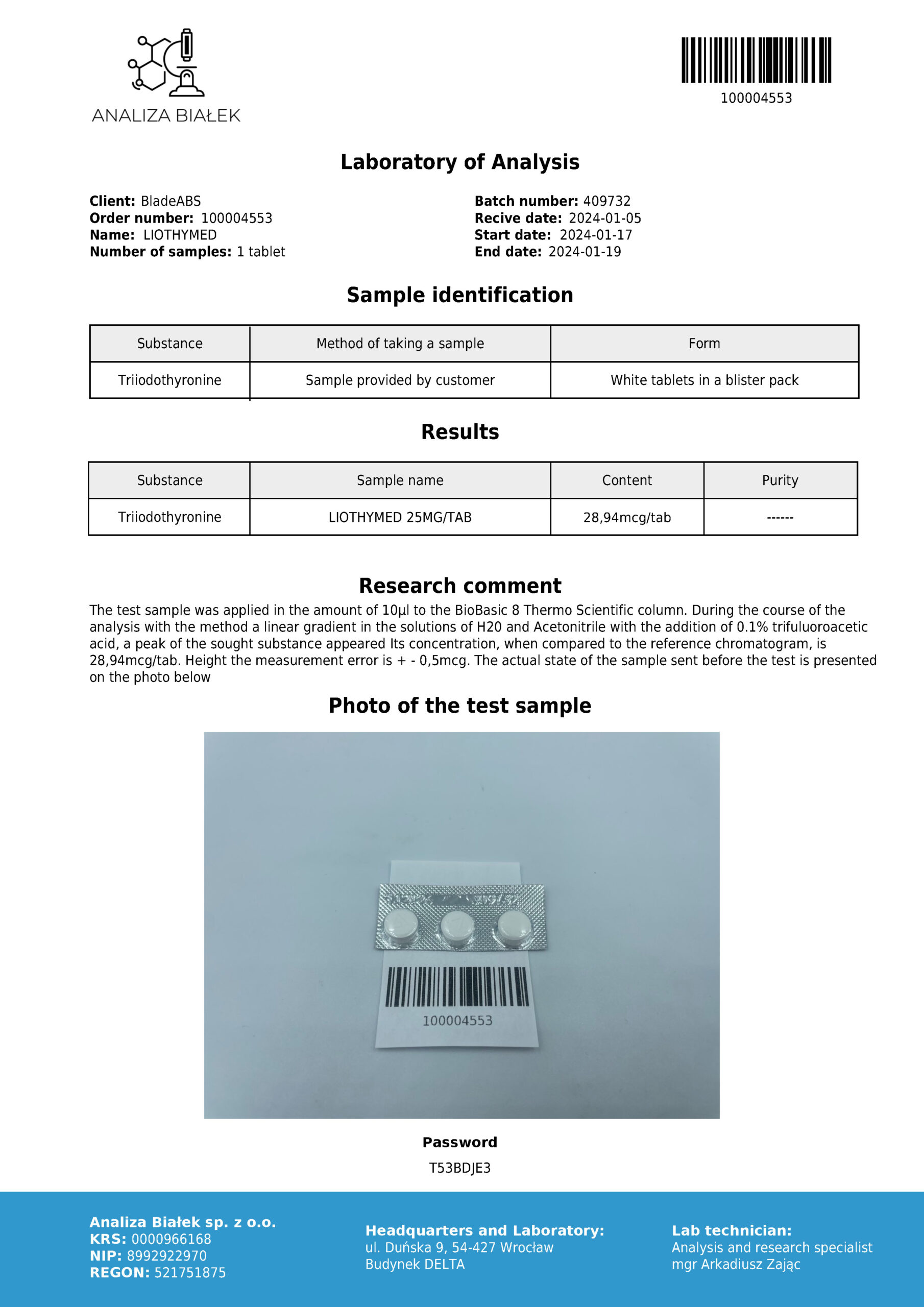
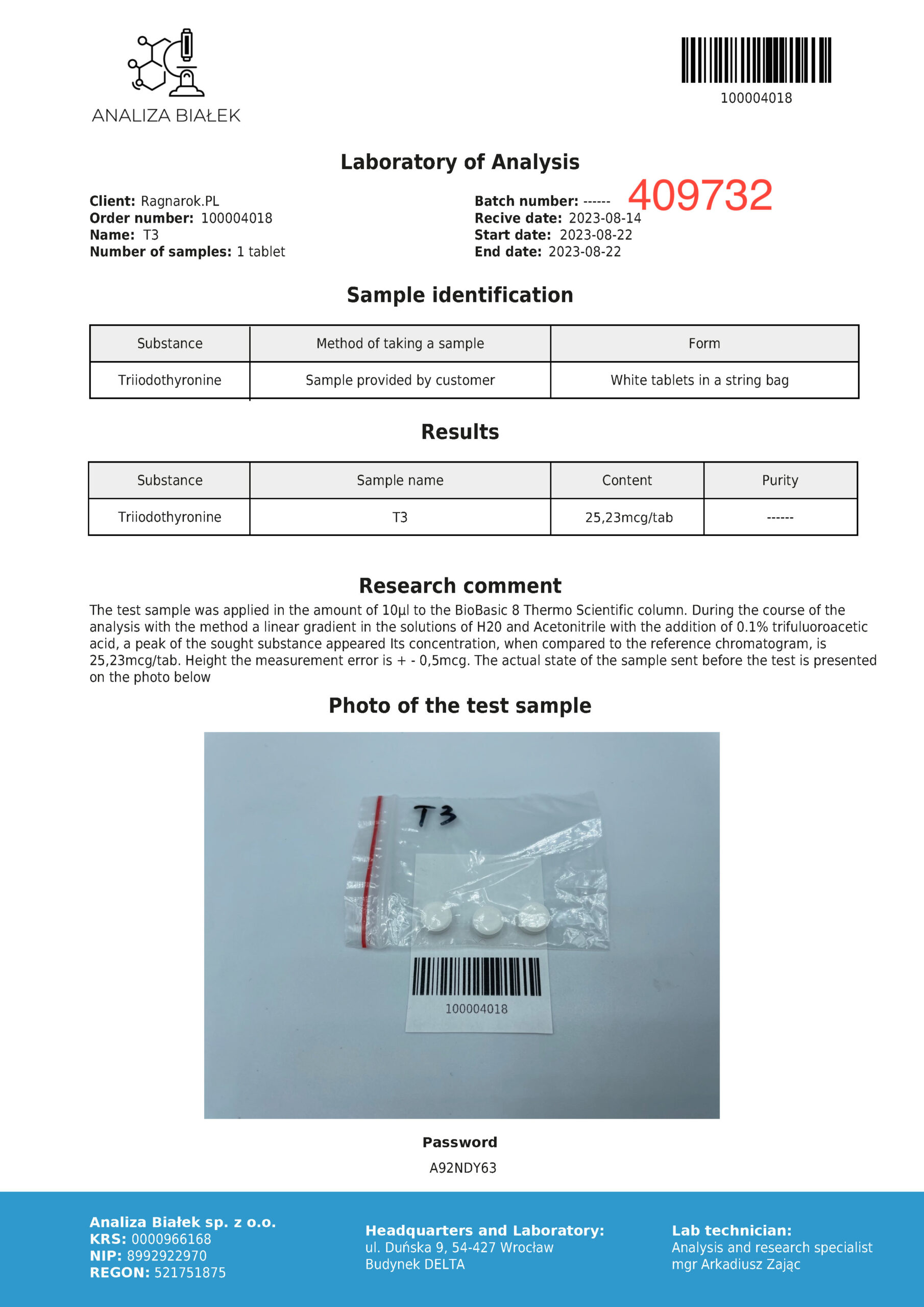
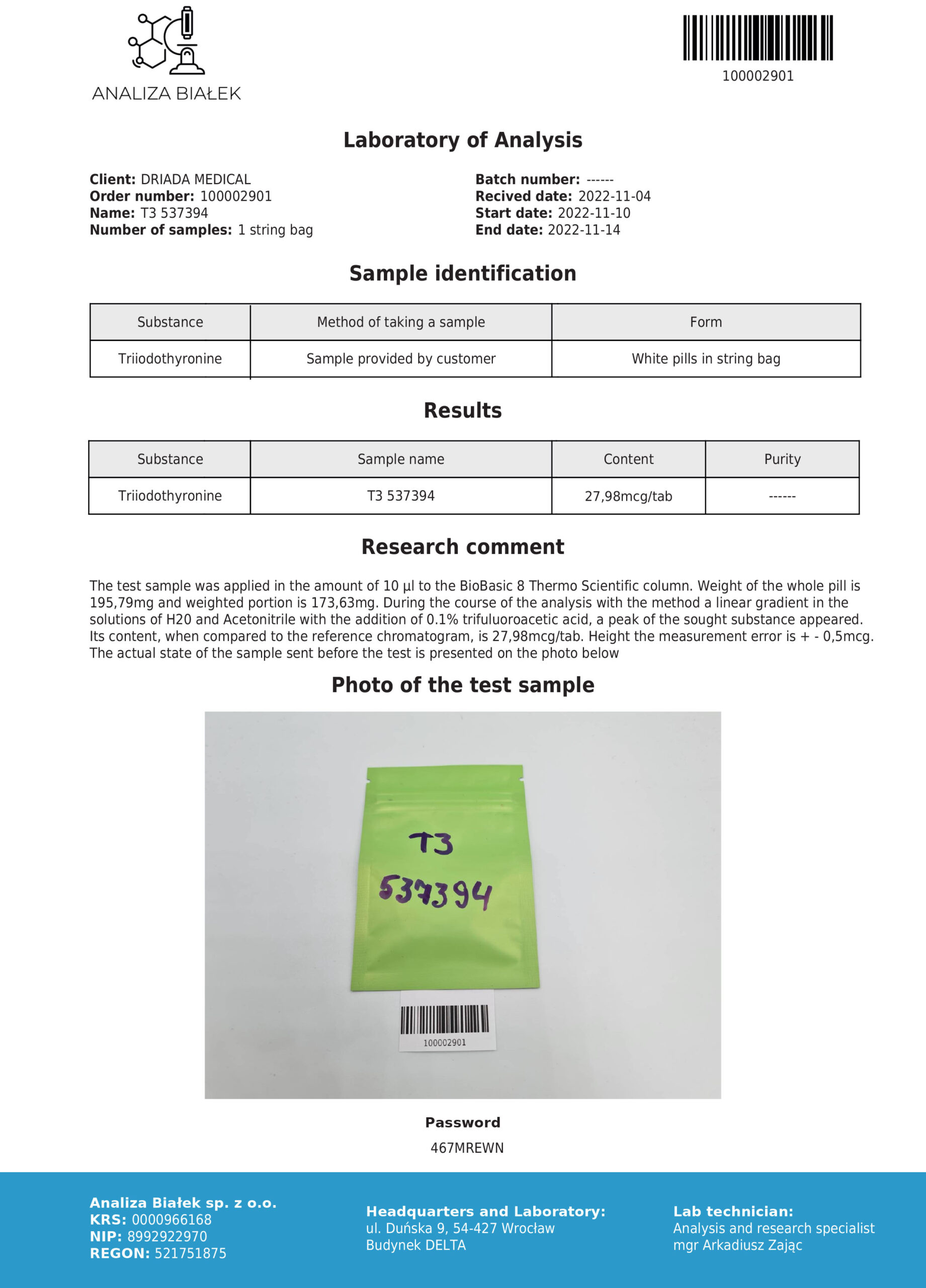
Liothymed 25 mcg (T3 – Triiodothyronine)
T3 – Triiodothyronine
Active ingredients: Triiodothyronine (T3)
Category: thyroid hormones
Dosage form: tablets for oral use
Package: 100 tablets
- Shipping (if the product is in stock): 3 business days for processing and 5 to 20 business days for shipping
- Processing and shipping costs: €27 throughout Italy
What is T3 (Triiodothyronine)?
Triiodothyronine (T3) is the most metabolically active thyroid hormone produced by the thyroid gland. The thyroid plays a central role in regulating numerous physiological processes, particularly energy metabolism. A distinctive feature of thyroid hormones, including T3, is the presence of iodine, an element essential for the proper development of the body and metabolic balance.
T3 affects almost all tissues in the body, regulating energy consumption, metabolic rate, and energy distribution. During growth, it is essential for the proper development of the central nervous system, while in adults it contributes to maintaining metabolic homeostasis.
The thyroid gland stores large amounts of thyroid hormones. The main hormone secreted is thyroxine (T4), which is converted into triiodothyronine (T3) in peripheral tissues such as the liver, brain, and muscles. Hormone levels are regulated by the anterior pituitary gland via TSH, according to a precise negative feedback mechanism.
Main effects of T3
-
Regulation of basal metabolism
-
Acceleration of fat burning
-
Increased energy expenditure
-
Support for physical performance
-
Potential preservation of muscle mass when combined with anabolic support
Mechanism of action of triiodothyronine (T3)
T3 acts at the cellular level by binding to thyroid hormone receptors (THR) located in the cell nucleus. These receptors function as transcription factors, regulating the expression of genes involved in energy metabolism. For more information, see Yohimbinos 2.5 mg (yohimbine hydrochloride).
The main biological effects include:
-
Increase in basal metabolic rate (BMR): increase in oxygen consumption and ATP production
-
Stimulation of lipolysis: breakdown of triglycerides into free fatty acids
-
Thermogenesis: increased heat production, especially in brown adipose tissue
-
Enhancement of oxidative phosphorylation: increase in the number and efficiency of mitochondria
Main applications of T3
Fat Loss
Triiodothyronine (T3) is used to boost metabolism and promote lipolysis. On its own, it does not result in significant weight loss, but it is often incorporated into protocols aimed at body sculpting.
Hypothyroidism
T3 is indicated in cases where T4 therapy alone is insufficient, or when there is reduced peripheral conversion.
Cognitive Functions and Attention
Optimal T3 levels are associated with improved concentration, mental clarity, and cognitive performance.
Support for mood disorders
Clinical studies have shown the benefits of triiodothyronine as an adjunctive treatment in patients with depression that is resistant to antidepressants.
Dosage strategy (metabolic use)
-
Common starting dose: 25 mcg per day
-
Gradual increases of 25 mcg every 5–6 days
-
Maximum commonly used dose: 100 mcg per day
-
Frequent method: pyramid pattern (25 → 50 → 75 → 100 → 75 → 50 → 25)
-
Typical cycle duration: 5–6 weeks, followed by a break of at least 6 weeks
Recommended monitoring
-
TSH, FT3, FT4
-
Lipid profile
-
Complete blood count
-
Heart rate and blood pressure
Possible side effects
-
Tachycardia and palpitations
-
Excessive sweating and heat intolerance
-
Tremors
-
Nausea
-
Increased muscle catabolism if used without adequate support
Warnings
Improper use of T3 (triiodothyronine) can cause cardiovascular effects, muscle loss, blood sugar changes, and reduced bone density. It is essential to follow the correct dosages and cycles.
Contraindications
-
Untreated thyrotoxicosis
-
Acute myocardial infarction
-
Uncontrolled heart conditions
Storage
-
Keep out of reach of children
-
Store in a cool, dry place.
-
At room temperature
-
Do not use after the expiration date
Related products
-
Pitavastatin 1mg (Pivasta 1) (50 tablets, 5 blister packs)
The original price was: €55.52 €The current price is: €52. -
Modus 100mg (Modafinil)
The original price was: €25.23 €The current price is: €23. -
Accutadyn 10mg (Isotretinoin)
The original price was: $40.37 €The current price is: €37. -
Testoheal 40 mg (Oral Testosterone Undecanoate)
The original price was: €44.41 €The current price is: €41. -
Halos 5mg (Fluoxymesterone) – Halotestin
The original price was: €80.76 €The current price is: €76.