

Yohimbinos 2.5mg (Yohimbine Hydrochloride) Yohimbine hydrochloride
Pure Yohimbine Hydrochloride
Active ingredient: Yohimbine hydrochloride
Pharmacological class: α2-adrenergic receptor antagonist
Pharmaceutical form: tablets for oral use
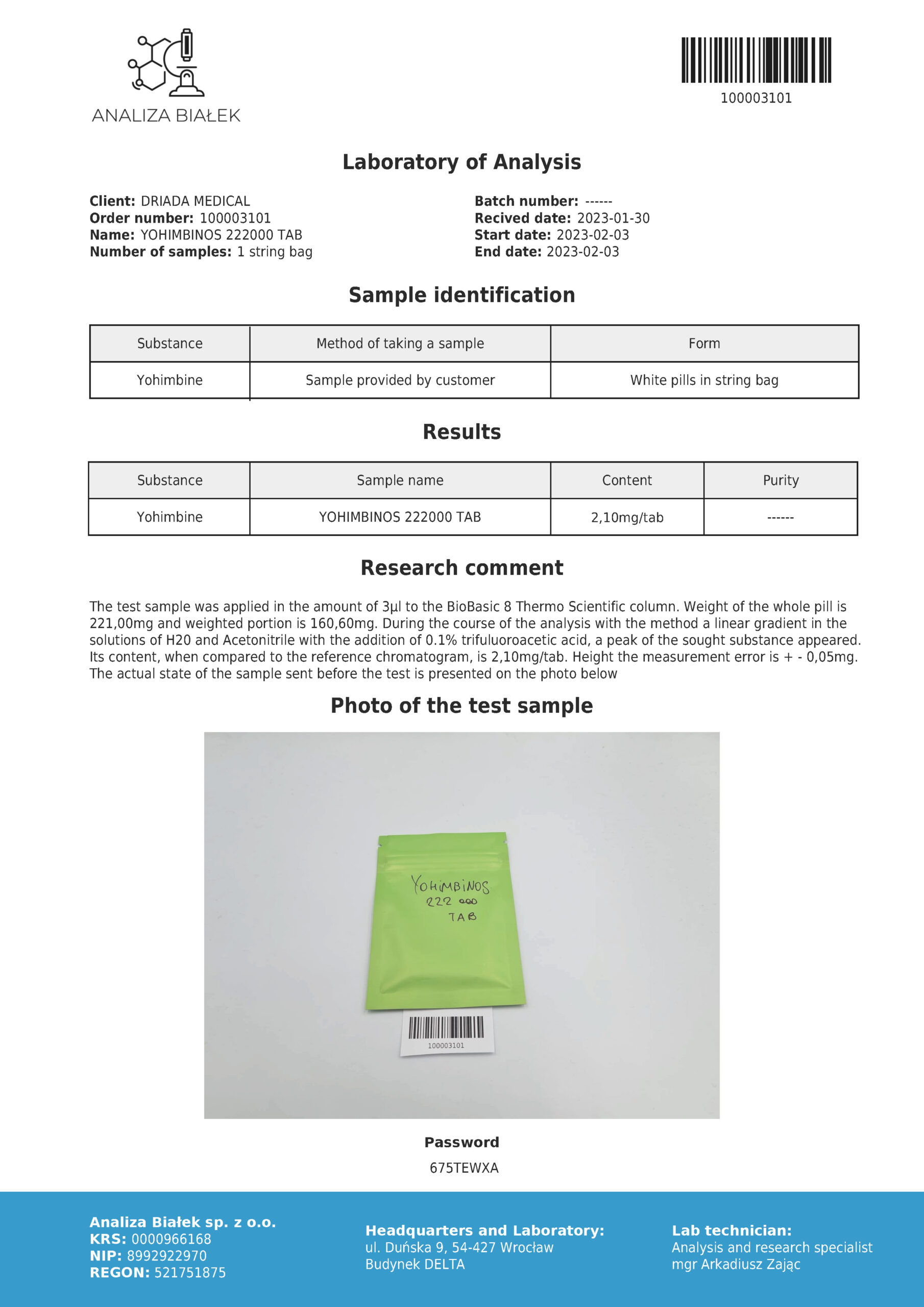
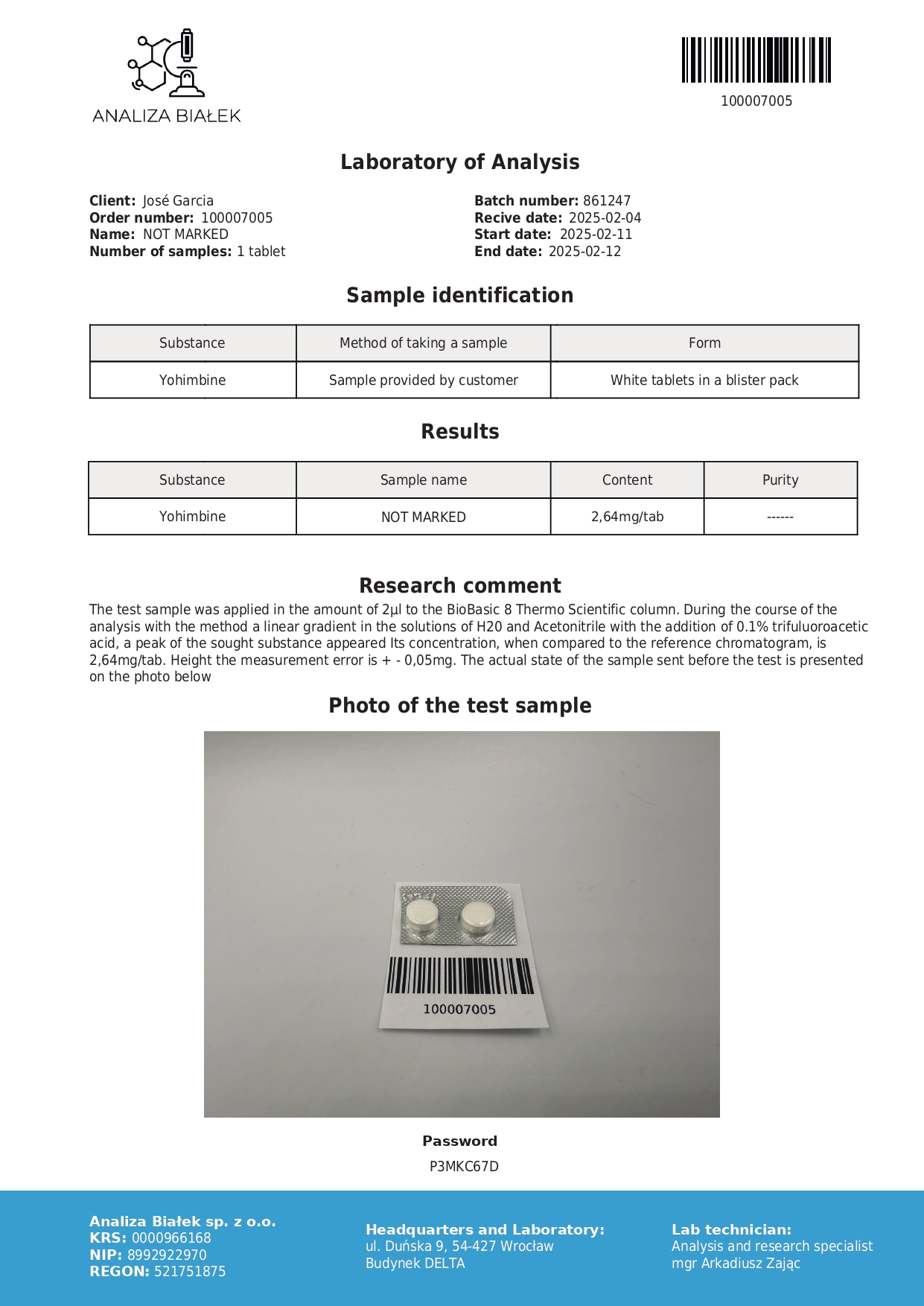
Package: 2.5 mg/tablet, 100 tablets
- Shipping (if the product is in stock): 3 business days for processing and 5 to 20 business days for shipping
- Processing and shipping costs: €27 throughout Italy
Description
Yohimbine hydrochloride is an indolealkylamine alkaloid known primarily for its lipolytic properties and its ability to support male sexual function. In addition to its use as a fat burner, yohimbine hydrochloride has also been used to treat erectile dysfunction and has mild mydriatic properties.
Yohimbine hydrochloride belongs to the class of α2-adrenergic receptor antagonists and acts primarily by blocking presynaptic alpha-2 receptors. This action modulates the activity of the peripheral autonomic nervous system, promoting an increase in parasympathetic (cholinergic) activity and a reduction in sympathetic (adrenergic) activity.
In the context of male sexual function, erection is closely related to cholinergic activity and alpha-2 adrenergic receptor blockade. Consequently, yohimbine hydrochloride promotes increased blood flow to the penis and reduced venous outflow, thereby improving erectile response.
At high doses, yohimbine hydrochloride can affect mood and increase anxiety; these effects are dose-dependent and do not correspond entirely to the standard usage profile.
Mechanism of action
Yohimbine hydrochloride exerts its primary action as a presynaptic blocker of alpha-2-adrenergic receptors . Blockade of these receptors interrupts the inhibition of norepinephrine release, resulting in increased secondary sympathetic stimulation.
At the central level, yohimbine hydrochloride stimulates the noradrenergic nuclei of the brain, increasing the frequency of neuronal firing. In addition to norepinephrine, other neurotransmitters, including dopamine, serotonin, and cholinergic systems , may also be involved, contributing to the effects on attention, energy, and psycho-emotional tone.
Intended use
Yohimbine hydrochloride is widely used during cutting phases thanks to its significant fat-burning effect.
The mechanism is linked to the role of adrenergic receptors:
-
activation of beta receptors promotes lipolysis
-
Activation of alpha receptors inhibits the release of adrenaline and promotes fat accumulation
By blocking alpha-2 receptors, yohimbine hydrochloride enables more effective mobilization of fatty acids , even in areas notoriously resistant to fat loss, characterized by a high density of alpha-2 receptors.
For this reason, yohimbine hydrochloride is often combined with other fat-burning agents, such as clenbuterol, to take advantage of their synergistic effects.
Dosage
-
Maximum dose generally considered safe: up to 20 mg per day
-
Recommended starting dose: 2.5–5 mg
The dosage should be increased gradually based on individual tolerance.
Main effects
Yohimbine hydrochloride may offer the following benefits:
-
stimulation of libido and increased sexual arousal
-
improved blood flow to the corpora cavernosa
-
support for psychological and emotional well-being and sexual safety
-
mild antidiuretic effect
-
mobilization of fatty acids from adipose tissue
-
increased physical activity and physical performance
-
support for endurance and strength during training
At low doses, it can raise blood pressure, while at higher doses it can lower it due to alpha-adrenergic blockade.
Side effects
The side effects of yohimbine hydrochloride are generally dose-dependent and may include:
-
tachycardia and changes in blood pressure
-
restlessness and nervousness
-
insomnia or drowsiness
-
headache
-
dizziness
-
skin redness caused by vasodilation
Pharmacokinetic profile
-
Half-life: approximately 6 hours
-
Frequency of intake: 1–2 times a day
Contraindications and warnings
The risk of side effects increases when yohimbine hydrochloride is combined with other stimulants. Caution is advised for individuals who are sensitive to stimulants or have cardiovascular conditions.
Tolerance
With prolonged use, some people may develop tolerance to yohimbine hydrochloride. This phenomenon is related to:
-
alpha-2 receptor desensitization
-
gradual decrease in lipolytic efficacy
Strategies to reduce tolerance:
-
cyclical use (e.g., 2 weeks on / 4 weeks off)
-
Avoid long-term continuous use
-
Do not exceed the recommended doses
Conservation
-
Keep out of reach of children
-
Store in a cool, dry place
-
Keep out of direct sunlight
-
Store at room temperature
-
Do not use after the expiration date
Related products
-
Raloxos 30mg (Raloxifene)
The original price was: €32.29 €The current price is: €29. -
Methacetos 25 mg (Metenolone acetate) – Primobolan Acetate
The original price was: €90.88 €The current price is: €88. -
T4 Euthymed 50 mcg (Levothyroxine Sodium) Thyroxine
The original price was: €26.22 €The current price is: €22. -
Tirzepatide 5mg – Fat-Burning Peptide – Mounjaro
The original price was: €64.59 €The current price is: €59. -
Nolvados 10 mg (Tamoxifen Citrate) – Nolvadex
The original price was: $34.25 €The current price is: €25.