
When it comes to testosterone, many discussions stop at the name of the active ingredient and overlook the aspect that, in practice, truly changes the user experience: the formulation. This is where the difference between base testosterone and blended testosterone lies.
For an experienced rider, the right question isn’t which one “pulls harder,” but which release profile, which blood stability, and which practical handling characteristics they are choosing.


- 1
- 2
Chemical differences between pure testosterone and testosterone blends
Testosterone base, in the pharmacological sense of the term, refers to unesterified testosterone. In injectable form, it has traditionally been available as an aqueous suspension; however, it is rarely used in modern clinical practice today precisely because of its very short duration of action.
A testosterone blend, on the other hand, is a mixture of multiple testosterone esters in a single formulation. The best-known example is that of multi-ester formulations composed of short-, medium-, and long-acting esters, designed to provide a sustained release over time.
The distinction is simple but crucial: in pure testosterone, only the free hormone is present; in the blend, the same hormone is present, but it is bound to different esters that alter its rate of absorption and duration of action.
This difference does not change the nature of testosterone; it changes the way it enters the bloodstream.
| Formulation | Composition | Release Profile | Practical sessions |
|---|---|---|---|
| Testosterone base | Free testosterone, ester-free | Very quick, very short | Very common |
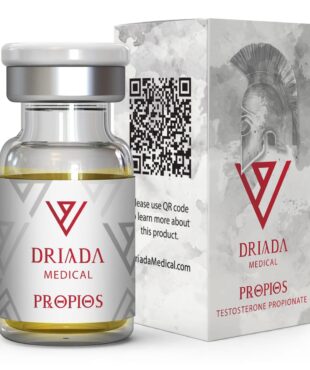
| Testosterone propionate | Just one short ester | Quick, with a limited duration | Frequent |
| or cippionato | Just one average foreigner | More gradual and stable | Intermediate |
| Testosterone undecanoate | A single long ester | Very long | Very sparse |
| Testosterone blend | A blend of short-, medium-, and long-chain esters | Multi-phase, with an initial peak and a long tail | Variable, often more convenient than the basic version |
There is also a detail that is often overlooked: the weight of the ester affects the actual amount of free testosterone contained in each milligram of the product. This means that two formulations with the same nominal dosage do not always contain the same net amount of available hormone.
Pharmacokinetics of testosterone: peak levels, half-life, and stability of levels
The real difference between the base and the blend lies in their pharmacokinetics.
Testosterone base enters the bloodstream quickly and is eliminated just as rapidly. The result is a sharp spike, followed by an equally rapid decline. For those who focus on plasma levels, this translates into significant fluctuations.
In the blend, the opposite occurs. Shorter esters provide a quick initial impact, while medium- and long-chain esters maintain their effects over a longer period. The final profile is “layered”: some notes emerge quickly, while others linger longer.
This is not merely a theoretical distinction. Stable levels influence subjective perception, frequency of administration, control of peaks, and routine management.
Now that this point has been clarified, the practical difference can be summarized as follows:
- Very rapid initial rise in basal testosterone
- Rapid drop in blood levels
- Need for frequent dosing
- Greater exposure to noticeable fluctuations
- A more gradual and prolonged release in the blends
Those who focus solely on the name “testosterone” see a single substance; those who focus on its kinetics see compounds with very different behaviors.
The Anabolic and Androgenic Effects of Testosterone: What Really Changes and What Doesn't
Let’s be very clear about this: given the same overall exposure to testosterone, testosterone base and testosterone blend do not magically become two molecules with different anabolic potencies. The active ingredient remains the same.
This means that the effects on protein synthesis, recovery, strength, libido, HPA axis suppression, aromatization, and conversion to DHT depend primarily on the total dose, duration of exposure, and individual response—not on whether the product is labeled as a “base” or a “blend.”
So where do the differences come into play? In the peaks and fluctuations. A more aggressive peak can accentuate certain acute responses, including estrogen conversion in susceptible individuals. A more stable release may result in a less erratic curve, but it does not eliminate the risks.
This is a point that is often misunderstood.
Many users associate the blend with a “more comprehensive” effect or the base with a “stronger” impact. In reality, this impression almost always stems from the rate at which levels rise and fall, not from any difference in the molecule’s anabolic properties.
Medical Use of Testosterone and the Sports Context
In medicine, injectable free testosterone has remained on the sidelines precisely for practical reasons. A formulation with a very short half-life requires too frequent administration for chronic treatment. For this reason, clinical practice favors medium- or long-acting esters or transdermal formulations.
In the context of sports and bodybuilding, the reasoning changes—but not in the way many people imagine. The preference often shifts toward medium-chain, long-chain, or multi-ester blends for one simple reason: they allow for more structured training plans.
This doesn't make the blend inherently superior. In many cases, it simply makes it easier to handle.
There is also a regulatory aspect that should not be overlooked: testosterone is a prescription drug, and its use in competitive sports is prohibited by anti-doping regulations, regardless of the ester or blend used.
Practical benefits of testosterone blends and limitations of pure testosterone
When comparing these two options, the advantages of the blend are almost entirely operational. They do not relate to “greater” anabolic effects, but rather to the release profile.
A well-formulated blend aims to balance two key requirements: initial response and sustained effects. Testosterone base, on the other hand, remains an extremely fast-acting agent, but it also demands frequent and consistent administration.
This leads to tangible differences:
- Convenience: The blend generally reduces the need for frequent dosing
- Stability: The concentration curve tends to be less steep than that of free testosterone
- Flexibility: The base allows for quicker adjustments, but requires closer monitoring
- Local tolerability: aqueous suspensions of free testosterone are often perceived as more irritating than common esterified oil-based solutions
- Practical benefits: longer-lasting formulas make your routine easier
Unmodified testosterone, however, is not without its theoretical merits. Its rapid onset of action allows for very precise control of exposure, at least from a purely pharmacokinetic standpoint. It is precisely this characteristic, however, that makes it unattractive in daily practice.
For those who take a rigorous approach to the subject, blending is not a shortcut. It is a technical compromise between speed and longevity.
Side effects of testosterone: the blend does not eliminate the risks
This point requires clarification. Changing the ester does not eliminate the main side effects of testosterone.
Aromatization, water retention, gynecomastia, acne, worsening of androgenetic alopecia, increased hematocrit, blood pressure changes, suppression of endogenous production, and effects on the lipid profile remain key issues in both formulations.
The most plausible difference lies in the shape of the peaks, not in the existence of the risks. A more gradual release may smooth out some of the perceived fluctuations, but it does not make testosterone a “gentle” substance for the cardiovascular or endocrine systems.
It’s worth going over a few points in order:
- Estrogens: both the base and the blend can increase estrogenic conversion
- Lipids: The worsening of HDL and other metabolic markers remains a serious concern
- Hematocrit: Elevated levels can increase the cardiovascular workload
- HPTA axis: suppression of endogenous production is expected
- Doping and Legality: the problem remains the same, regardless of how it is phrased
In other words, the blend alters the curve, not the fact that the curve affects the body.
Product Quality and Batch Control for Injectable Testosterone
When it comes to testosterone, the formulation is only half the story. The other half concerns manufacturing quality, actual concentration, sterility, the solvents used, and consistency between the label and the contents.
This is an area where the gap between theory and reality can be quite wide. A blend that looks good on paper loses its value if the batch is underdosed, unstable, or poorly prepared. The same applies to a single ester.
When making an informed purchase, the following practical factors are important:
- tested batches
- independent analyses
- traceability
- clarity regarding the product's origin
In the online market, these factors carry even more weight than the choice between a base product and a blend. A formulation that looks excellent on paper but hasn’t undergone rigorous testing remains an unknown quantity.
That’s why it makes sense to prioritize suppliers who claim to have rigorous quality controls, internal batch testing, and independent laboratory verification, along with discreet and traceable logistics. In the performance segment, the difference between a reliable product and a subpar one often starts here—not with the name printed on the vial.
How to Choose Between Pure Testosterone and Testosterone Blends Based on Technical Criteria
This choice only makes sense if it starts with a specific question: Are you looking for extreme speed or stability? Do you want a short response window or a longer curve? Do you prioritize fine-tuned control over the response or the convenience of a less fragmented approach?
If convenience is the priority, the blend tends to be the preferred choice. If the priority is maximum pharmacokinetic rapidity, testosterone base has its own distinct role, although it remains impractical for most scenarios.
The most reliable assessment almost always depends on four variables:
- desired release profile
- acceptable operating frequency
- personal tolerance for fluctuations
- the actual reliability of the chosen product
Here we see the difference between a superficial and a technical interpretation of testosterone. The active ingredient is the same, but the formulation’s behavior profoundly changes the picture.
Anyone who thinks clearly will quickly realize that the question is not “which one works,” but rather “which redemption schedule best suits the objective, the management approach, and the level of risk one is willing to accept.”