
When it comes to stanozolol, the distinction between oral and injectable formulations is often reduced to simplistic slogans: one is supposedly “more convenient,” the other “cleaner”; one is “harder on the liver,” the other “less problematic.” The reality is less black-and-white and calls for more precise language.
If the goal is to understand what really changes, we need to shift our focus from the rhetoric of online forums to pharmacology, documented risks, and the quality of sources. This is the most rigorous way to evaluate a compound that remains associated with adverse hepatic, lipid, cardiovascular, and endocrine effects, regardless of the form chosen.
Oral and injectable Winstrol
-
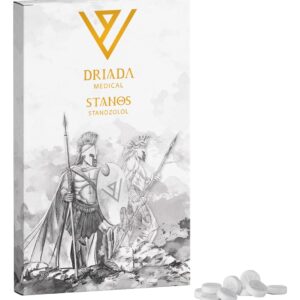
Stanos 10 mg Stanozolol, oral Winstrol
The original price was: $34.31 €The current price is: €31. -
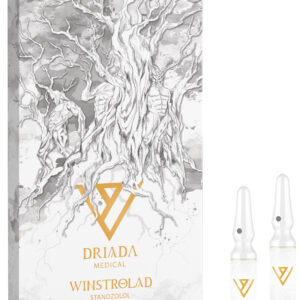
Winstrolad 50 mg/ml (Injectable Stanozolol) – Winstrol
The original price was: $38.34 €The current price is: €34.
Pharmacological differences between oral stanozolol and injectable stanozolol
Stanozolol is a 17α-alkylated anabolic-androgenic steroid. This chemical detail explains a great deal: the structural modification makes it orally active, as it is better able to withstand initial metabolism and effectively reaches the systemic circulation compared to unmodified androgens.
The oral formulation passes through the gastrointestinal tract and immediately involves the intestines and liver. The injectable formulation, traditionally an intramuscular aqueous suspension, bypasses the first-pass effect of the intestines in the traditional sense of oral absorption. This does not mean, however, that it “bypasses the liver.” Once absorbed, the compound circulates and is still metabolized in the liver.
The most significant difference concerns the drug's initial pharmacokinetics and absorption profile, not the elimination of systemic risks.
| Appearance | Oral formulation | Injectable formulation |
|---|---|---|
| Absorption | Gastrointestinal | For intramuscular injection |
| First step | Present | Avoided in the early stages |
| Liver involvement | Yes | Yes |
| Release Profile | Faster and more direct | Dependent on the deposit |
| Route-specific risks | Initial gastrointestinal and hepatic exposure | Local reactions, infections, non-sterile technique |
| A common misunderstanding | “It’s just a pill” | “It’s easy on the liver” |
This table helps clarify a key point: the proper comparison is not between “harmful” and “safe,” but between two routes of administration with pharmacokinetic differences and risks that largely overlap.
Liver metabolism and liver risk with stanozolol
The liver is one of the most frequently discussed targets, and for good reason. Stanozolol belongs to a class of compounds known for their potential to elevate liver enzymes, promote cholestasis, and, in severe cases, contribute to serious health complications. This applies as a general rule to the substance itself, not just the tablet form.
Many people believe that injectable medications are virtually neutral with regard to the liver. This is a misleading oversimplification. Bypassing the gastrointestinal tract does not mean eliminating biotransformation in the liver. The difference lies in the initial route of administration, not in the final metabolic outcome.
The clinical literature and case reports highlight an uncomfortable but useful point: serious liver events have also been reported with intramuscular stanozolol. It is therefore incorrect to assume that the injection confers some sort of toxicological immunity. For related guidance, see 30 mg methyldrostanolone liquid suspension.
Data and indicators worth noting:
- elevated AST and ALT levels
- reduction in HDL
- intrahepatic cholestasis
- persistent abnormalities in liver function
- Liver adenomas in cases of prolonged exposure
The most scientifically sound conclusion is this: the oral form is associated with a higher risk of liver stress, but the injectable form is still fully compatible with liver toxicity and cannot be presented as a “liver-safe” solution.
Cardiovascular risks and lipid profile with stanozolol
The liver isn’t the only concern. Stanozolol is often associated with a worsening of lipid profiles, including a decrease in HDL cholesterol and a more atherogenic profile. This is a serious issue because it’s not just about a number on a lab report: it contributes to overall cardiovascular risk.
In the clinical settings where the drug has been studied, adverse changes in lipid levels and liver enzymes have been observed even at low therapeutic doses. This is far more revealing than marketing claims, because it shows that the risk is not limited to extreme scenarios.
Conceptually speaking, comparing oral and injectable formulations does not change the fundamental point: both formulations result in systemic effects. The route of administration alters how the drug enters the bloodstream, but it does not eliminate its impact on lipids, blood pressure, vascular function, and, in the long term, the heart.
For anyone reading content online, there’s a simple rule: if a source focuses almost exclusively on aesthetics, “durability,” or practicality, but dismisses the cardiovascular aspect in just a few lines, that source is telling only part of the story.
Endocrine and dermatological risks, and other systemic effects
Stanozolol belongs to a group of substances that can suppressthe hypothalamic-pituitary-gonadal axis. In plain terms: the body may reduce its natural production of hormones, affecting testosterone levels, fertility, and overall well-being. In women, there is also a risk of virilization, a risk that is often underestimated in superficial discussions.
From a dermatological and cosmetic perspective, the picture is equally well-known: acne, oilier skin, and accelerated androgenetic alopecia in predisposed individuals. There is also an aspect that is often misrepresented: a “lean” physique does not equate to greater joint stability or a better risk-benefit ratio.
When assessing the profile of adverse effects, it is helpful to distinguish the areas involved:
- Endocrine system: hormonal suppression, reduced spermatogenesis, menstrual cycle changes in women
- Skin and related conditions: acne, seborrhea, worsening of hair loss in predisposed individuals
- Mental health and behavior: irritability, mood swings, altered perception of risk
- Musculoskeletal system: joint discomfort, especially when the training regimen becomes more intense
This overview is more useful than any comparison that boils down to “which one is more effective,” a question rooted in performance-based thinking rather than a medical or preventive perspective.
Risks specific to the injectable form of stanozolol
There is also a section that deals exclusively with the injectable form: local risks. Even when the discussion focuses on the liver, the injection carries its own set of problems that do not exist in the same way with oral administration.
We are talking about pain at the injection site, inflammation, bacterial contamination, abscesses, tissue damage, and the use of non-sterile materials or products of questionable quality. In non-medical settings, these risks increase because there is often a lack of pharmaceutical oversight, clinical supervision, and reliable handling standards.
One thing must be made clear: shifting risk from an organ to a procedure does not automatically reduce it.
What is the real difference between oral and injectable stanozolol?
If we set aside slogans, locker-room myths, and marketing jargon, the comparison becomes more sober but also more useful. Absorption, the initial phase of the pharmacokinetic profile, the duration of release, and the risks associated with the route of administration all change. What remains unchanged is the fact that this is a compound with a real risk profile.
Oral medication is intuitively perceived as simpler because it does not require injections. However, this practical simplicity can lower the threshold for paying attention. A tablet tends to seem less demanding than it actually is from a biological standpoint.
The injectable form, on the other hand, is often regarded as technically superior. This is a common misconception. A more “sophisticated” approach does not necessarily mean a greater margin of safety. In some cases, it creates new problems without eliminating the underlying ones.
The key differences can be summarized as follows:
- The pharmacokinetics change: systemic absorption and release profile are not identical
- The nature of the risk differs: systemic and hepatic risk on the one hand, and local and procedural risk on the other
- The nature of the compound remains unchanged: the liver is still affected, lipids remain a serious concern, and the endocrine system may be disrupted
- The need for reliable sources remains unchanged: anecdotes and marketing are still poor guides in both directions
This is the difference that really matters when approaching the issue from an adult perspective.
How to critically evaluate sources on stanozolol
The internet is full of articles that compare oral and injectable forms in absolute terms. They usually use simplistic phrases like “drier,” “less toxic,” “stronger,” or “easier to manage.” These are appealing labels, but they rarely explain where the data comes from.
A credible source should at least cite clinical studies, medical reviews, or case reports, distinguishing between anecdotal observations and scientific literature. It should also clarify what is not yet known with certainty. In the case of stanozolol, there is a lack of robust clinical comparisons capable of clearly demonstrating the overall safety advantage of one route of administration over another.
There are a few simple tips that can help you choose what to read more effectively.
- Identifiable authors: names, affiliations, publication context
- Sources cited: PubMed, reviews, medical articles, regulatory documents
- Well-documented risks: liver, lipids, heart, endocrine system, local injection-related risks
- Empty promises: anyone who promises “clean” or “safe” results is oversimplifying things
- A balanced tone: fewer slogans, more limits, more data
The opposite is also true. If a text avoids clinical data, fails to distinguish between pharmacology and marketing, and presents subjective perceptions as universal truths, the quality of the information is low, even when the language appears technical.
When a proper medical review of stanozolol is needed
Anyone with a personal or family history of liver disease, dyslipidemia, hypertension, cardiovascular disease, or endocrine disorders should not view this issue as merely a matter of “formulation preference.” In such cases, the key issue is not choosing between oral and injectable formulations, but rather assessing the presence of factors that substantially increase the risk.
Even those who approach the issue solely from the outside—whether for research, fact-checking, or verifying sources—can derive tangible benefits from this approach: replacing a superficial comparison with a critical one. It is a useful shift in perspective, because it shifts the conversation from “what yields the best results” to “what is documented, what is uncertain, and what is misrepresented.”
And this is precisely where the distinction between oral and injectable forms ceases to be a matter of personal preference and becomes a more serious question regarding the quality of information, physiology, and the biological cost that certain shortcuts may entail.