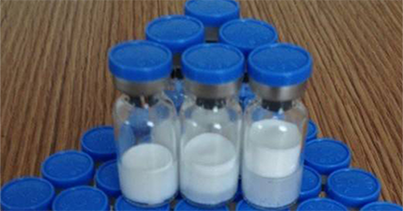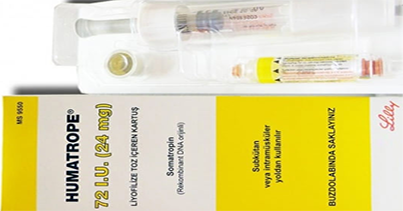

The topic of healing peptides is attracting attention for a very simple reason: everyone wants faster recovery, stronger tissues, and shorter time between injury and return to activity. In regenerative medicine, this drive has led to serious lines of research. In fitness and sports, however, this curiosity often moves faster than clinical trials.
It is helpful to discuss these molecules objectively, because their biological potential is real; however, not everything that looks promising in the laboratory proves equally valuable in human use. The difference between experimental data, clinical practice, and sports use makes all the difference.



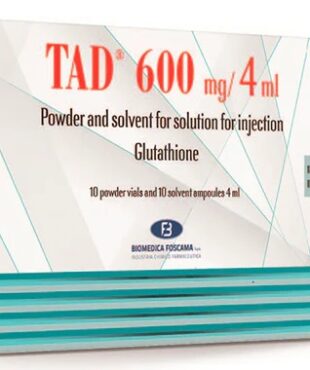


What are healing peptides, and why are they so interesting?
Healing peptides are short chains of amino acids with specific biological activity. They are not merely the “building blocks” of proteins: they also function as signals—that is, as messages that tell cells when to migrate, multiply, build new tissue, or modulate inflammation.
This makes them particularly valuable in tissue repair processes. When tissue is damaged, the body initiates a coordinated sequence of events: initial inflammation, cleansing of the injured area, cell proliferation, new blood vessel formation, collagen deposition, and final remodeling. Certain natural or synthetic peptides appear to intervene specifically in these stages, enhancing both the quality and speed of the repair response.
That is where their appeal lies.
However, this is not a single category. The term “healing peptides” encompasses growth factors, extracellular matrix peptides, antimicrobial peptides with regenerative properties, and synthetic molecules designed to promote the repair of tendons, muscles, skin, or other tissues.
How do peptides work in the tissue healing process?
The key point is cellular signaling. Certain peptides activate receptors and intracellular pathways involved in the proliferation of fibroblasts and keratinocytes, collagen synthesis, and angiogenesis. In practical terms, the goal is to create a microenvironment that is more conducive to orderly tissue repair.
Numerous biological pathways are involved, including MAPK/ERK, PI3K/Akt, TGF-β, and signaling pathways associated with EGF, FGF, and PDGF. This molecular language may seem far removed from everyday practice, but it describes something very concrete: a wound that heals better, tissue that receives more nutrients, and a less chaotic inflammatory response.
The most widely studied processes are the following:
- cell proliferation
- migration of fibroblasts and keratinocytes
- collagen synthesis and extracellular matrix
- angiogenesis
- modulation of local inflammation
It is important to note that no single peptide can “repair” complex damage on its own. Recovery always depends on the type of injury, mechanical load, sleep, nutrition, rehabilitation, and overall clinical management. When a peptide is effective, it fits into this framework rather than replacing it.
Main categories of healing peptides
To get a clear picture, it is helpful to distinguish between the main classes. This classification helps explain why some compounds have a broader clinical foundation, while others remain almost entirely confined to preclinical research or off-label use.
| Category | Examples | Primary action | State of the evidence |
|---|---|---|---|
| Peptide growth factors | EGF, FGF, PDGF, TGF-β | Stimulation of proliferation, cell migration, angiogenesis, collagen | Certain specific clinical applications, particularly in wound care |
| Regenerative antimicrobial peptides | LL-37, defensins | Microbial control and support for re-epithelialization | Growing scientific interest, limited clinical use |
| Extracellular matrix peptides | collagen fragments, matrikines such as KTTKS | Matrix support, signal for new collagen synthesis | Significant interest in dermatology and nutraceuticals |
| Synthetic peptides or bioregulators | , TB-500, GHK-Cu, thymosin | Multi-target action on inflammation, regeneration, and remodeling | Mostly preclinical data; few robust human data |
The table highlights a point that is often overlooked online: not all peptides carry the same scientific weight. A growth factor used in a medical protocol for chronic ulcers cannot be equated with a compound that is well-known in the sports world but still has limited clinical evidence in humans.
Potential benefits and limitations of the clinical evidence
Clinical evidence on peptides for healing
The most robust body of literature concerns certain growth factors used in specific clinical settings. The classic example is becaplermin, a gel based on recombinant PDGF used to treat diabetic foot ulcers according to specific guidelines. Here, we are not dealing with general hypotheses: there are clinical studies showing an improvement in healing rates or times compared to standard therapy alone.
There are also areas where the data are encouraging but less conclusive. Certain collagen-derived peptides, topical peptides used in dermatology, and regenerative molecules employed in research show positive signs regarding wound healing, the quality of granulation tissue, and inflammation control.
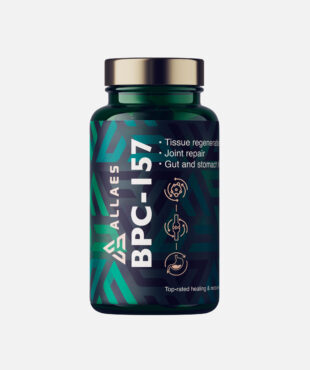
The situation changes significantly when we turn to the compounds most frequently cited in the fitness world, such as BPC-157 or TB-500. Here, the literature is dominated by animal models, cellular data, and indirect observations. The biological rationale is intriguing, but the leap to large-scale, independent clinical trials in humans has not yet been made.
This distinction changes everything.
A potential benefit can be real without having yet been robustly demonstrated in clinical trials. For readers, the key is not to choose between blind enthusiasm and total rejection. The key is to weigh the level of evidence.
Risks, Contraindications, and Actual Safety of Healing Peptides
The risk profile depends on the peptide, the purity of the product, the route of administration, and the patient’s clinical context. The most commonly reported side effects are local: redness, pain, irritation, or discomfort at the application or injection site. However, this is only the most immediate aspect of the problem.
The real challenge is the lack of long-term data for many experimental peptides. If a molecule promotes cell proliferation, angiogenesis, or remodeling, its safety must be studied very carefully, especially in patients with a history of cancer, a significant chronic condition, or unstable clinical conditions.
The quality of the material also plays a decisive role. In an unregulated market, errors in concentration, contamination, instability, and improper storage are not minor issues. These are factors that can turn a substance that has already been little studied into an even more unpredictable variable.
Pregnancy, breastfeeding, pediatric patients, known or past cancers, and complex liver or heart conditions require extreme caution. In these cases, the issue is not simply “proceeding with caution,” but determining whether the circumstances warrant avoiding use entirely without close medical supervision.
Healing peptides in sports and anti-doping regulations
Why Peptides Appeal to Athletes and Bodybuilders
In the world of sports, recovery peptides are often associated with a powerful concept: getting back to training sooner, minimizing time off, and protecting tendons and muscles during periods of intense training. It’s an understandable idea, especially for those who approach performance with discipline and invest heavily in their training.
The problem is that the appeal of sports takes precedence over scientific research. While anecdotal evidence abounds, controlled studies on athletes are few and far between—or nonexistent. This means that many of the effects attributed to these compounds cannot be clearly distinguished from factors such as rest, physical therapy, reduced training load, the placebo effect, or the natural healing process of the injury.
Peptides and Anti-Doping Rules
For competitive athletes, the regulatory framework is very clear. Numerous peptides, growth factors, analogs, and secretagogues fall under the categories prohibited by WADA. Some are expressly banned as peptide hormones or growth factors; others fall under the category of unapproved substances.
This means that using these substances both in and out of competition can lead to disqualifications, disciplinary action, and reputational damage. Furthermore, the lack of clinical approval for certain compounds does not make them “gray” or tolerated; it often makes them even more problematic from an anti-doping perspective.
For serious athletes, the message is very clear: a solid recovery strategy is built on planning, diagnosis, physical therapy, sleep, nutrition, and monitoring. Everything else must be evaluated against very high standards.
How to evaluate the quality, sources, and expectations regarding healing peptides
People searching for information online often encounter two extremes: exaggerated claims or vague scare tactics. Neither approach is particularly helpful. A well-informed assessment begins with the quality of the sources, clarity regarding the compound’s legal status, and transparency regarding product testing.
When reading articles, technical data sheets, or sales proposals, it’s a good idea to ask yourself a few very simple but crucial questions:
- Scientific source: Peer-reviewed studies and institutional documents carry more weight than promotional content
- Type of evidence: Data from cells and animals do not equate to robust clinical results in humans
- Quality control: tested batches, independent analyses, and traceability help mitigate some of the risks associated with the product’s composition
- Legal framework: approved medical use, off-label use, and unapproved substances are very different categories
- Medical supervision: medical history, contraindications, tests, and monitoring remain the most important screening tool
There is also the matter of expectations. Peptides are no substitute for proper recovery management. If a tendon continues to be subjected to improper loads, if technique remains flawed, or if sleep is insufficient, no molecule can truly make up for that shortfall.
For this reason, the greatest value of good information is not to promise shortcuts. It is to help distinguish between what is based on credible evidence and what is still largely based on speculation, marketing, or hearsay. In such a sensitive field, clarity is already a competitive advantage.